

In the world of music education, assessment has never been my favorite topic, and I’m pretty sure I share that sentiment with many colleagues. And while it may not be as exciting as conducting your concert, assessments are vital for meaningful student growth.
Music performance assessment seems to be the most frequently misunderstood task. After all, music is subjective, right? Administrators and parents may argue that it’s impossible to grade someone on their singing or how they play their instrument. They might feel that music should be pass/fail, or not graded at all. I’ve encountered many of these misconceptions over the years. But here’s the truth: Without music performance assessments, many music programs will lack the rigor needed for worthwhile progress.
Therefore, in this post, I am sharing my best music performance assessment strategies with the hope that doing so will provide clarity and growth for music educators, parents, and administrators. Let’s begin.
Why Music Performance Assessment Matters
Think about your own standards and beliefs about music. Imagine you’ve saved up a considerable amount of money to see your favorite singer or band live in concert. You’re excited. You’re anticipating a fantastic performance. Now, imagine that same performer sings their songs out of tune. They can’t remember the lyrics. The lead guitarist is hitting wrong notes.
You’d probably want your money back, right? You’d probably wonder, why weren’t they better prepared? And, while a professional concert certainly has higher stakes than a school music class, it reinforces my point. Standards for music are real. The National Core Arts Standards exist for a reason. Music performance skills can be measured just as effectively as reading comprehension or mathematics. Afterall:
- A note is either right or wrong
- A beat is either steady or inconsistent
- Rhythm is either correct or incorrect
Many music performance skills that can be evaluated through proper music performance assessment exist beyond these examples. Assessing students on targeted musical skills elevates the standards and success of our programs. With this in mind, let’s discuss some of the musical skills that can be evaluated within a performance setting.
Music Performance Assessment Skills

Many different types of performance skills can be assessed depending on what your goals and musical curriculum entail. For younger grades, such as K-2, I’d recommend focusing on one or two assessment skills at a time. For older grades, it is more acceptable to focus on several skills at once. Here are examples of musical skills you might opt to evaluate in a music performance assessment:
- Steady Beat
- Rhythm
- Matching Pitch
- Note Reading
- Intonation
- Articulation
- Use of Dynamics
- Phrasing
- Performance Etiquette
- Watching the Conductor
- Audience Etiquette
- Observing Specific Musical Symbols (i.e. repeat signs, codas, etc…)
- Pedagogical Skills
Moreover, to avoid parent pushback, students must understand your expectations for any music performance assessment. If you’re looking for note-reading skills, make sure they know that! Want them to conduct themselves professionally during a concert performance? Tell them you’re keeping an eye out for it. This helps you cover yourself and defend your assessment practices if they ever come into question.
How To Structure a Music Performance Assessment
Data is critical to any type of assessment, and music is no exception. When parents attend conferences to discuss student progress, classroom teachers can back up their grading with evidence of the student’s work. As music teachers, we need to be able to provide the same evidence.
When it comes to music performance assessments, I am a big fan of using rubrics to track student data. By using a rubric, I can effectively measure each student’s performance accurately without the interference of bias or my personal opinions.
I’ve created a lot of different rubrics for music performance assessments over the years, but it really boils down to choosing a few targeted musical skills and determining what level of progress I’d like to see from the students. Let’s use steady beat as an example.
When is comes to evaluating steady beat in a music performance assessment, there are generally three things that you’ll observe:
- The student cannot maintain a steady beat
- The student sometimes has a steady beat, but is inconsistent
- The student maintains the steady beat
These simple observations can easily be assigned points and structured into a rubric along with other chosen musical skills.
Another example in music performance assessment might be note reading. You might decide to assign a percentage for the number of notes the student plays correctly. I prefer to focus on the number of measures played correctly in a musical excerpt. Example:
- The student played correct notes in 0 out of 4 measures
- The student played correct notes in 1 out of 4 measures
- The student played correct notes in 2 out of 4 measures
- The student played correct notes in 3 out of 4 measures
- The student played correct notes in all 4 measures
It is also important to keep copies of all your rubrics and data to refer to when asked. This may seem like a lot, especially when many of us teach hundreds or thousands of students each year, but it’s crucial. Why? If a parent asks you how their child is doing in music, and you tell them their child got a C on a recorder assessment, the parent will likely want to know why. With so many students, it can be really hard to remember who did what during a performance. Keeping copies of your performance assessment rubrics ensures that you always have data to discuss student progress whenever needed.
The Benefits of Recording Music Performance Assessments
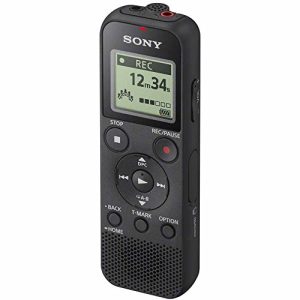
If you have permission from your admin to record students, doing so can be really helpful for evaluating music performance assessments. It helps you retain an accurate record of the student’s musical performance. It also helps you ensure accuracy with grading, since you’ll be able to refer and re-listen to student musical performances whenever needed.
If you’re looking for a great device to record music performance assessments on, I highly recommend this awesome little Sony device I bought a few years back. I find it has nice sound quality for a compact device. It also has lots of storage space, which is great for music teachers, and the battery life is excellent. If you’re in the market for a recording device, try this one out.
Other Considerations for Music Performance Assessments
While using rubrics and recording devices might be a great starting point, these methods won’t be appropriate for every student in your classroom. You may have exceptional learners or students with special needs who might require a different approach. For these situations, I always recommend reading each student’s IEP or 504 plan to determine what music assessment modifications are appropriate. If you’re not sure how to modify something, I suggest reaching out to the child study team for clarification so you can best support these students through the assessment.
Another consideration? Music performance assessments can be stressful and scary for certain students, and it’s important to keep that in mind. Here are some strategies I’ve implemented that have made a difference in this case:
- Opting for small group performance assessments instead of individual ones
- Allowing up to two attempts on the assessment
- Awarding extra points for mistake recovery—this means a student can recover and continue if they make a mistake on their assessment.
Lastly, you can alleviate a lot of stress and anxiety associated with music performance assessments by nurturing a supportive classroom environment. This means that those students who are waiting are quiet and respectful during the music assessment process. If you don’t think this will be possible with your group of students, try offering another task to complete while waiting, such as a performance reflection statement or a music worksheet. If problems continue, refer to your class expectations and deliver appropriate consequences when necessary.
While a quiet environment is essential for running fair music performance assessments, I do encourage my students to show their support for peers by clapping or offering kind words at the conclusion of each assessment.
FREE! Music Performance Assessment Rubrics
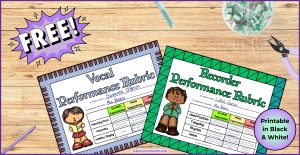
Need a reference point for developing your own music performance assessment rubrics? You can access my printable rubrics for vocal and instrumental music by joining the Chamber of Freebies. Once you join, you’ll gain access to my rubrics and growing library of printable and digital music education resources. It’s free to join! Click the link below to sign up!

Wrapping It All Up!
Music performance assessments may not be the most exciting part of our job, but they’re so important for us as music teachers. Assessing our students regularly helps us recognize musical strengths and weaknesses. It helps us guide future instruction and select repertoire that supports musical growth. It also supports effective and accurate communication regarding musical progress to parents and school administrators.
How do you feel about music performance assessments? Do you agree that they help support high-quality music instruction? Or are they a waste of our already limited instruction time? To share your thoughts, please feel free to comment below.
Looking for quiet music class activities for standardized testing? Check out my post How to Manage Testing Week in Music Class next!
*Please note: This post contains affiliate links. Using an affiliate link means I will earn a small commission at no additional cost to you. You can read more about my use of affiliate links in my disclosure statement. Thank you for supporting magic in music education!