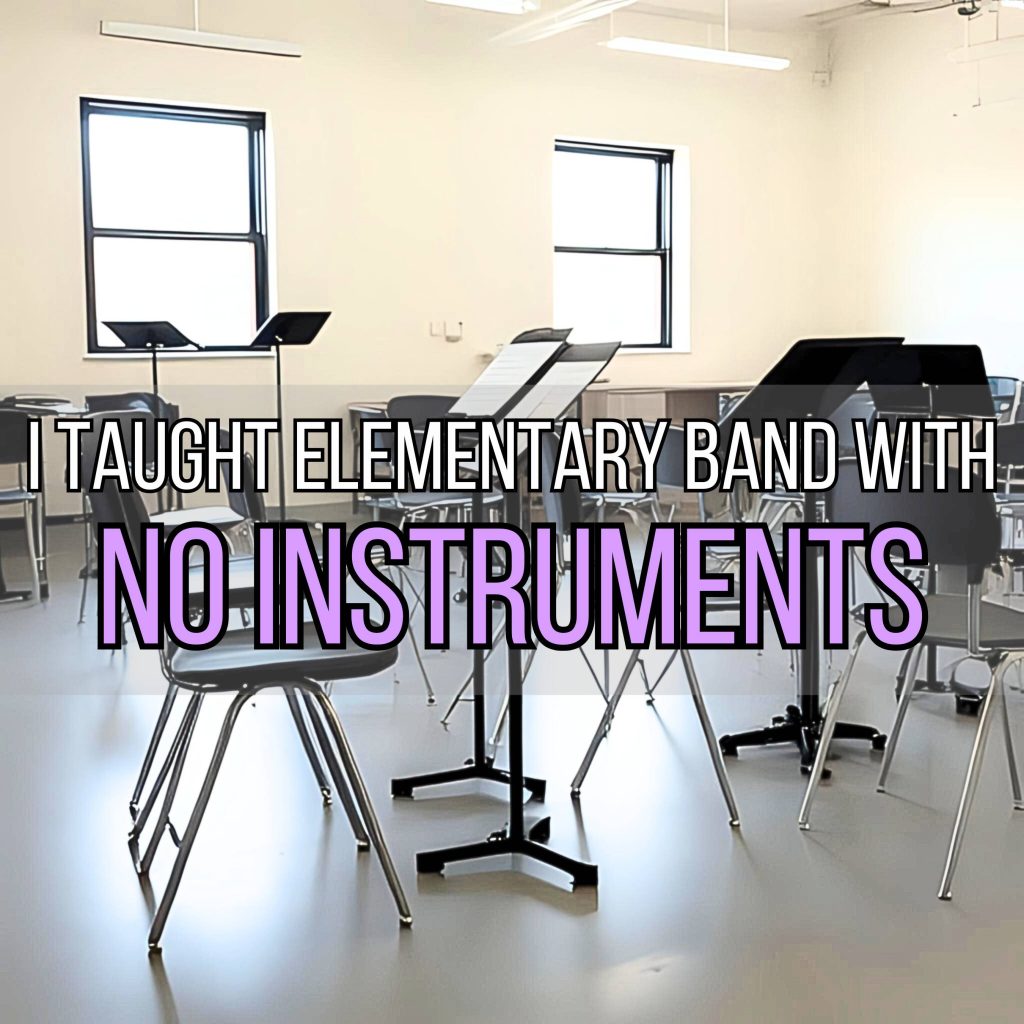
Elementary band has always been my favorite branch of teaching in music education. I enjoy the fun and challenge of starting a child on a musical instrument from scratch. Transforming the initial first squeaks and squawks into a balanced ensemble sound at concert time was something I took immense pride in. During those years, I never imagined I’d be put in a position where I’d be expected to teach instrumental music with no instruments, and yet it happened.
What follows in this post is a reflection of one of the most challenging periods of my entire teaching career. It’s the story of a newly added teaching position backed by an administration pushing to compete with schools with rigorous arts programs while cutting corners and dismissing professional opinions and students in the process.
I honestly debated writing this post because this was such a difficult experience for me at the time. Although I’ve moved forward from this experience, I did learn from it and I hope to share some insight into how I adapted in an a near-impossible teaching scenario.
Table of Contents
- 1 Why I Thought This Was My Dream Teaching Position
- 2 My Evolving Role: Elementary Band + Strings?
- 3 Lack of Resources and No Instruments
- 4 Teaching Elementary Band While I Waited for Instruments
- 5 Prepping for Elementary Band with No Instruments
- 6 Teaching Elementary Band with Instruments At Last!
- 7 The Fallout and What I Learned
- 8 What I’m Doing Now and How I Can Help You
Why I Thought This Was My Dream Teaching Position
Did I mention that elementary band is my favorite area of teaching? I was two years into my teaching career when I decided I wanted to make the move from charter school teaching into public schools. I was already teaching elementary band on a smaller scale in my charter school job but was intrigued when an I found an opening for an elementary band position for a first-time elementary band program.
Problem #1: This particular school district (which will not be named) had never had an elementary band program in place previously. At the time, I saw this as a bonus since I’d be able to build my own program (the way I wanted) from the ground up. In hindsight, I should have seen this as a red flag that the district did not value or prioritize elementary music education, instead opting to start students on their instrument in the 7th grade as a standard practice for many years.
I attended several rounds of interviews, which I initially felt positive about. The admin seemed ready and eager to grow their band program, explaining that they had budgeted extensively for this new program and seemed excited that I had already grown a similar program from scratch on a smaller scale.
I was all to eager to sign the contract when I was finally offered the position after three rounds of interviews and demo lessons. I really thought I had landed my dream job of teaching elementary band. So where did it all go wrong?
My Evolving Role: Elementary Band + Strings?

In hindsight, I should have paid closer attention when the interviewer asked about my strings teaching background.
“We’re considering starting a small strings program here. Nothing major. It will probably be an optional club that happens during lunchtime. Do you think you could assist with that?”
The question was casual and seemed like an afterthought. And while I wasn’t a strings expert, I had some playing experience from my strings methods classes in college and told the interviewer it wouldn’t be a problem.
Then I got the schedule. Elementary band and strings. Scheduled together as one class. Panicking, I tried to explain the complications to the administrator who had just hired me. My concern was completely dismissed and it was made clear to me that this was their expectation whether I liked it or not.
I tried a different tactic. “Could we at least try pull-out lessons? This way I can offer individualized attention to each student?”
“We won’t do pull-outs.” I was told curtly. “They’ll miss important subjects like math and science.”
Problem #2: I had just signed a teaching contract with a school district that had every indication of devaluing the arts and music education, and I hadn’t done enough research or investigation on my own end before signing that contract. This locked me into a challenging situation for the entire year.
Lack of Resources and No Instruments
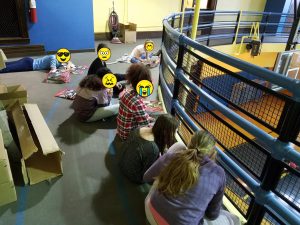
Did I mention there was no music room?
Yep, on top of the nightmare of having band and strings together in the same period and the challenge of teaching without pullouts, I was also expected to lug my teaching materials around with me, classroom to classroom. I was not offered a cart and was denied one when I asked. I became limited to planning for what I could fit in a backpack as I traveled from classroom to classroom.
Where would the instruments go? “The hallway is fine” was the reply I received from my admin when I asked. Fortunately, instruments weren’t cluttering the hallways yet because there were no instruments.
I wasn’t immediately concerned about this. I had made prior arrangements with the admin to host an instrument petting zoo to help guide students towards the instrument that would be the strongest fit. From there, the district had agreed to purchase all of the instruments, accessories and supplies outright from a reputable retailer we had both agreed on.
Problem #3: While this district claimed to have a budget for the expense of purchasing instruments and supplies outright, they would later delay the purchase of those same instruments and supplies for months while shopping around for cheaper retailer options. This is likely why most public school districts encourage students to supply their own instruments either by purchasing used or through a school-approved rental program. It’s likely that many school districts don’t have an accurate perspective on the cost of quality student instruments along with the necessary music stands, method books, cost of reeds and other supplies needed for a quality elementary band program.
Teaching Elementary Band While I Waited for Instruments
Let’s fast forward to January 2017 (well into the US school year). The instrument petting zoo had gone off without a hitch but I still had no instruments.
Don’t get me wrong! I had sent the quote from our mutually agreed-upon retailer months ago! They had even discounted our district 30% for the large order. But we still had no instruments. And anytime I asked I was immediately shut down or dismissed.
So what the heck do you teach elementary band students with no instruments? I’ll admit I asked myself this question a lot, but I found ways.
It got me thinking about other musical skills my students would need proficiency in to succeed in an elementary band (plus strings) setting.
During that uncertain time, I prioritized those skills, focusing on rhythm drills and honing in on music theory to ensure my students were capable rhythm and note readers. It was something that would help immensely once the instruments finally arrived.
It would take my district three months to settle on a new retailer and finally order instruments for my elementary band program. So let’s talk about that next.
Prepping for Elementary Band with No Instruments

One of the major downsides to ordering hundreds of brand new band and string mid-school year is that most music retailers are unprepared to ship hundreds of new band and string instruments in bulk without warning. It’s even more complicated when the district is trying to pinch pennies by ordering the cheapest instrument brands in stock.
This caused the retailer to scramble and ship instruments from warehouses all over the world with different delivery rates.
There were no instruments for my school’s elementary band program until about mid-February. At that point, the first round of violins and trumpets began to trickle in. I did not get all 200+ instruments and supplies at once. Each shipment arrived with a few instruments with some small shipments containing 1 or 2 instruments and other shipments containing 30 or more instruments.
If I’m being 100% honest, I’m thankful the instruments were delivered slowly because there was an immense amount of work involved with mounting bridges and tuning each string instrument over and over again. I was also creating a meticulous and well-organized inventory of every instrument so we could hit the ground running when the last shipment did come in. To me, it didn’t make much sense to provide instruments for some students and not others, so I opted to wait until every instrument was available. The final delivery arrived in early April 2017. We finally had our instruments at last!
Teaching Elementary Band with Instruments At Last!
The students were so excited. They asked about their band and string instruments every day. I was thrilled to finally start teaching elementary band.
The teaching circumstances were as challenging as they could be. Some class sizes were as large as twenty-four students. I was trying to teach seven different instruments at once within a single weekly class of thirty-six minutes. There were no pull-outs, and progress was slow. I had to teach my students to multitask and work on other musical skills while I assisted and taught other sections. There was almost no time for individualized attention. It was very hard.
On a particularly challenging day, a student tripped and landed with his cello while he was moving too quickly in the classroom. This led to a broken neck (something impossible to repair without equipment). It was then I found out that my district hadn’t budgeted for repairs either.
Problem #4: About three weeks after distributing instruments, my administration sat down with me and asked about my students performing in a district-wide concert. I was honest about the progress of my students and said my students weren’t ready for a performance and were still in the process of learning their first notes. My admin was not exactly thrilled when I told them this and seemed upset that the students hadn’t made more progress in this timeframe. I think this problem, in particular, highlighted the unrealistic expectations the admin had for the success of this program, coupled with my hesitancy to advocate properly for my program as a new teacher in the district.
The Fallout and What I Learned
Despite my best efforts, this elementary band position did not work out for me and I did not return the next school year. It was not for lack of effort or trying. It was a position I put my whole heart into. I was pretty devastated when it didn’t work out.
And although I have strong feelings about the choices of my district, I do believe I learned something.
I don’t know if it would have made a difference, but I think if I were in this teaching position now, I would have spoken out more. I would have pushed harder for what I thought was right. If I’m being honest, I’m not positive it would have made a difference in my situation but I also never felt right about how dismissive my district was of my advice and guidance.
I should have spoken out for the students above all else. They were promised an elementary band program and were given something else. They deserved so much better than what they got that year. I hope they know I tried my best. I hope they are able to experience instrument playing under better circumstances.
What I’m Doing Now and How I Can Help You
This happened a long time ago but I thought it was still worth sharing the story, especially since it highlights challenges that really do occur in the elementary band room. I really hope it helps another music teacher who might find themselves in a similar situation.
For those wondering, I left that school district after one year and went on to teach in a district that I really enjoyed for six more years. There are good administrators out there! I also learned to be much more critical and careful during job interviews, learning to evaluate the position for myself too!
I have since left public school music teaching to focus on serving private students, along with international and homeschool families through a mix on online and in-person teaching. I’ve also prioritized building this blog and my TPT store Magic of Music Ed to support other music teachers with high-quality teaching resources and practical teaching advice.
I currently offer a growing library of teaching resources for elementary and middle school music teachers called The Chamber of Freebies. Inside is a mix of printable and digital music teaching resources you can use with your students in your classroom. You’ll also be opted in to my occasional newsletter where I share resources and links to articles like this, where I speak honestly about my teaching experiences, share my best music lessons and resources. I hope you’ll join me on this journey!