Skip to content
site-logo

Magic of Music Ed

Making Music A Bit More Magical!

  • Blog
  • Shop
  • Chamber of Freebies
  • About Me
  • Contact
  • Blog
  • Shop
  • Chamber of Freebies
  • About Me
  • Contact
Band

3 Elementary Music Lessons That Teach Note Reading

3 Elementary Music Lessons That Teach Note Reading

I get it — note reading probably isn’t your favorite music teaching topic. How could it possibly compete with the joys of bucket drumming and Boomwhackers? You think you know what to do. Your elementary music lessons are simple. You draw five lines and teach them “Every Good Boy Does Fine.” That’s more than enough to teach note reading, right? So why are the students still asking you to write note names in? Why can’t they read what’s on the page?

There are no shortcuts to music literacy. Students need music lessons that teach note reading step by step. When students understand the process for note reading, they transform into confident and capable musicians. Ultimately, your teaching process becomes easier as students develop the independence to read and prepare music themselves. Who wouldn’t want that?

The following three elementary music lessons will each cover an aspect of teaching note reading and music literacy. These elementary music lessons are designed for grades 3-6, once students are ready to build foundations in music literacy. You may also purchase a bundle of all three of the music notation reading lessons here.

1. Clefs and Staff – Google Slides Elementary Music Lesson
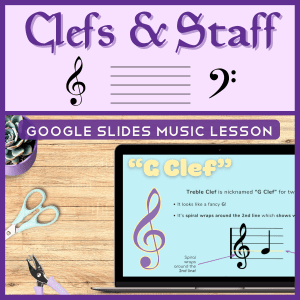
Promotional image for a Google Slides lesson on note reading in elementary music lessons, featuring treble and bass clefs on a music staff. A laptop screen shows a slide explaining the “G Clef,” designed to help young learners read notes. The image uses purple and mint colors with classroom tools on a wooden desk background.

Music notation reading starts with understanding the role of the music staff and the various clefs. In this Google Slides lesson, your students will:

  • Understand the role of the music staff
  • Differentiate between line notes and space notes
  • Number each line of the music staff from bottom to top!
  • Learn the role of each clef: Treble, Bass (Even Alto and Tenor are mentioned!)

In addition to the lesson slides, this lesson also comes with digital and printable assessments that you can use to evaluate student understanding post-lesson! This is an excellent first lesson to prepare your students for note reading!

2. Reading Music Notation on the Treble Staff – Google Slides Lesson
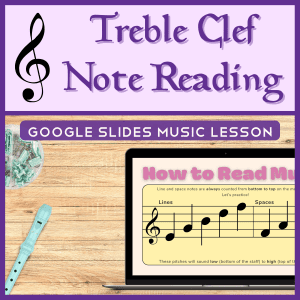
Treble Clef Note Reading Google Slides lesson image for elementary music lessons. The graphic features a pastel purple and mint green theme with a treble clef symbol and a laptop displaying a visual aid for note reading on the music staff, highlighting lines and spaces in treble clef.

This note-reading lesson is the perfect follow-up to the Clefs and Staff lesson! The lesson starts by teaching students the music alphabet first, before introducing the names of the line and space notes in treble clef. Additionally, silly, memorable mnemonic devices are included to help your students discover their favorite for the treble line notes E-G-B-D-F.

Here’s what your students will discover in this lesson!

  • The Musical Alphabet: A-B-C-D-E-F-G
  • Review of the Music Staff – Line and Space Notes
  • Names of Treble Line Notes: E-G-B-D-F
  • Names of Treble Space Notes: F-A-C-E
  • Mnemonic Devices for Treble Line Notes (ex: Every Good Boy Does Fine)
  • Treble Notes in Alphabetical Order (Line to Space)

Just like the Clefs and Staff lesson, this lesson also includes a digital and printable assessment that you can use to evaluate your students’ understanding at the end of the lesson.

3. Treble Clef Ledger Lines Notes – Google Slides Music Lesson for Note Reading

Cover image for “Treble Clef Ledger Line Notes | Google Slides Music Lesson,” showing a colorful elementary music slide with ledger line note examples and a definition of ledger lines on a laptop screen.

If your students are successfully reading notes on the staff, you may notice that there is a bit of uncertainty, guesswork, and confusion surrounding ledger line notes. Ledger line notes can be especially confusing because mnemonic devices won’t work in this case. You’ll find that this lesson is an excellent starting point for teaching the process of reading ledger line notes. Furthermore, it introduces and guides students through exercises using a four-step method to identify each ledger line note in treble clef. And finally, it includes a cheat slide at the end for students to reference when checking their work.

Here’s what’s covered in this lesson:

  • Identifying Ledger Line Notes
  • The Four-Step Process to Reading Ledger Line Notes
  • Applied Practice

As I’m sure you know, learning to read ledger line notes is a process that will require consistent reinforcement to stick. If you’d like to improve your students’ ledger line reading ability, I strongly encourage you to check out my post Teaching Ledger Line Notes in Elementary Music, which includes even MORE resources, games, and tips for teaching ledger line notes to your students.

The Path to Notation Reading and Musical Literacy

Transforming your students into strong, confident note readers is going to take time, patience, and lots of positive reinforcement. With this in mind, teaching note reading starts with having a plan, a method, and consistent reinforcement of that method with students. I make a point not to spoon-feed or pencil in note names for my students, because I feel like this is the slowest path to true musical independence. Instead, in my classroom, we practice note reading as a standard part of the class routine until students are reading accurately and consistently without the need for my assistance, correction, or intervention. 

It’s such an incredible thing when your students take ownership of their learning and work as a team to identify notes and correct each other’s mistakes. Step out of the role of note feeder and into the role of music facilitator!

Once your students develop confidence in their note reading, they start to rely on their own knowledge and on each other, rather than wait for the teacher’s help. This shift fosters independence, deepens their understanding, and ultimately makes your students stronger musicians. The more you embed note reading into your daily routine, the more it becomes second nature for your students—and that’s when the real transformation happens. Stick with it, trust the process, and celebrate every small victory along the way!
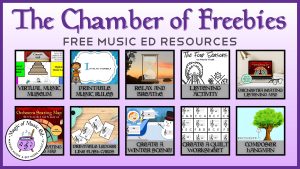
Are you looking for magical freebies to get your students started on note reading? The Chamber of Freebies is a growing library stocked with engaging materials for music educators. Inside, you’ll find tools for note reading along with printables, music lessons, digital activities, and more to bring a little extra spark to your teaching. ✨
SHARE THIS
BandBeginning Music Teacherelementary musicGeneral Music ClassInstrumental MusicLesson PlansMusic Classmusic classroomMusic Lesson IdeasMusic Lessons for KidsMusic LiteracyNew Music TeachersNote ReadingorchestraReading Music
About Suzanne

About Suzanne

My name is Suzanne. I am a music teacher from the state of NJ who is passionate about sharing creative ideas for the music classroom!

Related Posts

Teaching Music to Students with Hyperacusis
Is Music Class a Waste of Time?
Music Performance Assessment in the Classroom
An Easy Thanksgiving Music Activity for K-1

Leave a Reply Cancel reply

Your email address will not be published. Required fields are marked *

Recent Posts

  • Teaching Music to Students with Hyperacusis
  • Is Music Class a Waste of Time?
  • Music Performance Assessment in the Classroom
  • An Easy Thanksgiving Music Activity for K-1
  • Strategies for Teaching Note Values to Kids

Recent Comments

  1. SDelonas on How Music Education Benefits Students
  2. Monish Mehta on How Music Education Benefits Students
  3. SDelonas on How Music Education Benefits Students
  4. Binay Kumar Sarker on How Music Education Benefits Students
  5. Classroom Transitions in Elementary Music - Magic of Music Ed on 10 Tips for Teaching Music Effectively

Archives

  • November 2025
  • October 2025
  • September 2025
  • August 2025
  • July 2025
  • June 2025
  • May 2025
  • April 2025
  • March 2025
  • February 2025
  • January 2025
  • December 2024
  • November 2024
  • October 2024
  • September 2024
  • August 2024
  • December 2022
  • April 2022
  • February 2022
  • January 2022
  • December 2021

Categories

  • Advocacy
  • Assessment & Testing
  • Assessment & Testing
  • Back to School
  • Band
  • Blog
  • Boom Learning
  • Chorus
  • Classroom Management
  • Composers
  • Concerts
  • Cross-Curricular
  • December
  • Dynamics
  • Earth Day
  • Fall
  • Freebies
  • Games for Music Class
  • Genres
  • Holidays
  • Instrumental Music Teachers
  • Instruments of the Orchestra
  • Ledger Lines
  • Lesson Ideas
  • Listening Lessons
  • Lunar New Year
  • Music Activities
  • Music Community
  • Music Form & Analysis
  • Music Games
  • Music Genres
  • Music History
  • Music Teacher Tech Help
  • Music Theory
  • New Music Teachers
  • Note Reading
  • Note Values & Duration
  • Orchestra
  • Parents
  • Pitch
  • Quiet Music Lessons
  • Reading Music
  • Recorder
  • Rhythm
  • Seasonal
  • Social-Emotional Learning (SEL)
  • Solfege
  • Songs
  • Special Education
  • Spring
  • Students
  • Sub Plans
  • Summer
  • Surviving Until Break
  • Teaching Ideas
  • Teaching Orchestra Seating
  • Teaching Tips
  • Tempo
  • Testing Week
  • Time Signatures
  • Uncategorized
  • Virtual Field Trips
  • Winter
  • World Culture
About Me

About Me

Suzanne, Music Teacher
Hi, I’m Suzanne! I am a singer, flutist and most importantly a passionate music educator. I love putting creativity and imagination into my teaching and I can't wait to share my ideas with music teachers like you!

Popular Posts

10 Unique Themes For School Concerts
Chorus ➤ December 29, 2021

10 Unique Themes For School Concerts

Am I the only music teacher who thinks about themes for the next school concert when the first one finishes? If you read my blog post about concert planning, you’ll know I typically like to...

Read More
Teaching Music Genres in Music Class
Genres ➤ February 6, 2022

Teaching Music Genres in Music Class

Are you teaching music genres in your elementary music class? Including a variety of music genres in your teaching is essential to ensuring a rounded music curriculum. It also plays a role in your students...

Read More
10 Tips for Teaching Music Effectively
Back to School ➤ December 1, 2022

10 Tips for Teaching Music Effectively

Nine years. Sometimes I can’t believe I’ve been teaching elementary music this long. It’s been a crazy journey and there’s never a dull moment. There have been humps, bumps, and potholes but there have also...

Read More
Concert Planning for Music Teachers
Chorus ➤ December 1, 2021

Concert Planning for Music Teachers

It’s December 1st – you know what that means. For most music teachers, December marks the beginning of crazy season. The time of year where we feel anxious and stressed beyond belief. I know it’s concert season because I start to leave my belongings in other classrooms when I travel teach – oops! In any case, this year marks my tenth winter concert and I’ve learned a few strategies along the way. This blog post features 24 of my best concert planning tips!

Read More

Categories

  • Advocacy
  • Assessment & Testing
  • Assessment & Testing
  • Back to School
  • Band
  • Blog
  • Boom Learning
  • Chorus
  • Classroom Management
  • Composers
  • Concerts
  • Cross-Curricular
  • December
  • Dynamics
  • Earth Day
  • Fall
  • Freebies
  • Games for Music Class
  • Genres
  • Holidays
  • Instrumental Music Teachers
  • Instruments of the Orchestra
  • Ledger Lines
  • Lesson Ideas
  • Listening Lessons
  • Lunar New Year
  • Music Activities
  • Music Community
  • Music Form & Analysis
  • Music Games
  • Music Genres
  • Music History
  • Music Teacher Tech Help
  • Music Theory
  • New Music Teachers
  • Note Reading
  • Note Values & Duration
  • Orchestra
  • Parents
  • Pitch
  • Quiet Music Lessons
  • Reading Music
  • Recorder
  • Rhythm
  • Seasonal
  • Social-Emotional Learning (SEL)
  • Solfege
  • Songs
  • Special Education
  • Spring
  • Students
  • Sub Plans
  • Summer
  • Surviving Until Break
  • Teaching Ideas
  • Teaching Orchestra Seating
  • Teaching Tips
  • Tempo
  • Testing Week
  • Time Signatures
  • Uncategorized
  • Virtual Field Trips
  • Winter
  • World Culture

Shop

Chamber of Freebies!

Not a member?

Join now for more helpful blog posts, music ed resources and (best of all) access to the growing library of free resources for elementary music teachers 🙂

Sign me up!

  • Blog
  • Shop
  • Chamber of Freebies
  • Disclosures & Disclaimers
  • Privacy Policy
  • Contact Me
Copyright © 2025 | All Rights Reserved |