

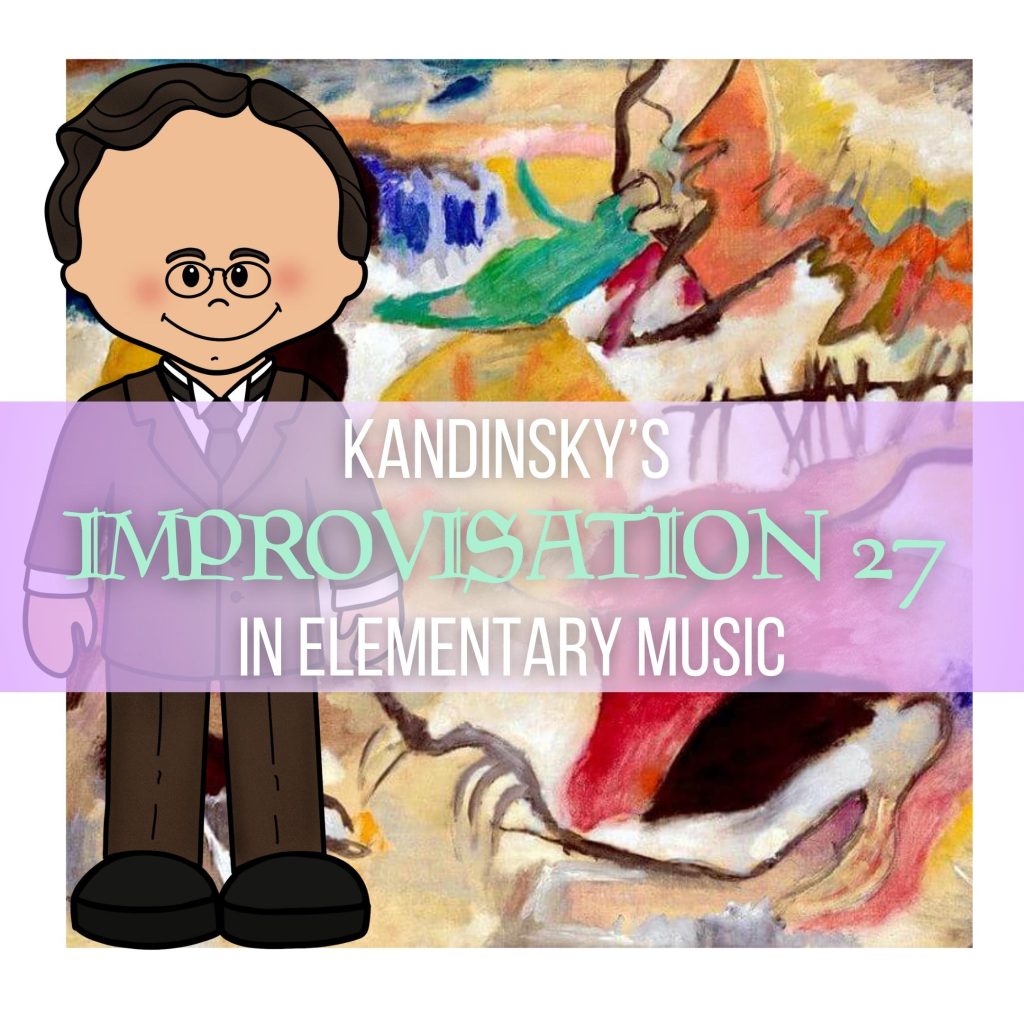
Do your elementary music students know that music and art are connected? Are you looking for a hands-on way to teach the creative process in music class?
I really love teaching elementary music students about Wassily Kandinsky. Studying Kandinsky’s Improvisation 27 offers students an opportunity to explore the creative process firsthand while making connections between music and visual art. This music lesson helps encourage creative thinking and active listening. Kandinsky’s work is also a wonderful example of abstract and creative thinking; he believed colors, shapes, and lines could capture emotions, just as music does. In fact, many experts believe Kandinsky had chromesthesia,a form of synesthesia where sound creates an experience of color, shape, and movement.
This lesson was a winner with one of my principals, and I’m so excited to share it with you! And, since I know how precious your planning time is, here are the quick details you need:
- Works well with grades 3-5
- Lesson length is about 45-60 minutes, but activities can be modified
- Aligns with National Core Arts Standards (MU:Re7.2 and MU:Cn11.1)
- Uses simple materials that you probably have: paper, pencils, and coloring supplies
- Includes an optional Chrome Music Lab activity your students will love!

When I taught this lesson, my principal wrote on my observation:
“You had some really great questions that made students think abstractly about art and music. I liked the question about describing the painting to somebody who can’t see. The class had some very interesting answers. This was a fun lesson!”
This music lesson invites students to step into Kandinsky’s world and experience the creative process in a meaningful and enjoyable way. Let’s take a closer look at how this lesson works.
A Music Lesson for Kandinsky’s Improvisation 27
In this listening lesson, elementary music students will get to experience the creative process of Kandinsky first hand using paper, a pencil, and some coloring supplies! They’ll then be guided through a listening activity where they’ll create abstract lines, images, and art while listening to The Garden of Eden by Denise Haas Norwood. This beautiful, emotional piece works perfectly for use around Valentine’s Day, though it’s meaningful any time of year.
Classroom Management Tips:
- Set out materials before students arrive, to maximize creative time
- Have students spread out, to give everyone creative space
- Use colored pencils or crayons—they’re less messy than markers
I always tell my students to let the music guide their artistic choices. Some will draw flowing lines, others might create bold shapes or use specific colors. There’s no wrong way to interpret the music! My students typically ask to hear the piece 2-3 times, which allows them to add layers and details to their artwork.
The discussion portion of this lesson often produces some of the most magical moments! Not every student will want to share their artwork, but those who do often spark incredible conversations about how different elements of the music inspired their artistic choices. I love hearing students describe why they chose specific colors, or how they interpreted different musical moments in their artwork.
Taking Creativity Digital with Chrome Music Lab (Optional Follow-Up Activity)
If you have access to devices, you can use this Chrome Music Lab portion to take the lesson to the next level! Students use Song Maker on Chrome Music Lab to transform their visual art back into music, creating a full circle of artistic expression. Here’s what you need to know:
- I strongly recommend headphones and ear buds when using 1:1 devices
- Chrome Music Lab will work on any device with internet access and audio capability
- This activity can be modified as a whole-class activity on your SmartBoard if 1:1 devices aren’t available
- Students typically need about 5-10 minutes to explore and create
The creative connections students make during this activity are incredible! Students who use bold, dynamic colors in their artwork often create powerful, energetic melodies. Those who draw flowing lines might compose gentle, smooth musical phrases. This activity helps students understand how artistic elements translate across different forms of expression. This creative exploration will prepare students perfectly for discovering Kandinsky’s own artistic journey.
Teaching Elementary Music Students About Kandinsky
This is the best part of the lesson! After students have experienced creating art inspired by music and (if you do activity #2) music inspired by art, it’s time to reveal that they’ve been exploring the creative process of a famous artist—Kandinsky! This is the part where you’ll share more about Kandinsky and his impact on the world of visual art. You can also talk about Kandinsky’s fascination with color and movement and how synesthesia may have played a role in his creative process.
This is a really awesome kid-friendly cartoon I found that really helps elementary music students learn about Kandinsky and his creative process of visualization:
Showing this video is optional, but I think it really helps to connect the concepts of this lesson.
Finally, to deepen your students’ connection with Kandinsky’s creative process, I also highly recommend the book The Noisy Paint Box: The Colors and Sounds of Kandinsky’s Abstract Art by Barb Rosenstock. While it’s a bit long for a single class period, you can choose to read from selected passages that highlight how Kandinsky experienced music through color,a perfect complement to your students’ own artistic explorations. It also makes a wonderful addition to your music classroom library! 😊 As you wrap up your introduction to Kandinsky, it’s time to discuss his artwork!
Kandinsky’s Improvisation 27 (Garden of Love II)

There’s no historical record to confirm whether or not Wassily Kandinsky listened to music while creating this stunning masterpiece of oil on canvas, but I feel like the bright colors, and abstract movements of this artwork really help facilitate some of the higher-level discussions that take place during this stage of the lesson. Here are some questions to ask:
- Why do you think Kandinsky chose these colors for his painting?
- How would you describe this painting to someone who could not see it?
- Can music relate to art? How?
The best part about this lesson is that every class has different ideas and responses to Kandinsky’s Improvisation 27. No class has analyzed this painting the same way which means the students are learning to appreciate the art authentically. And that’s something to celebrate!
If your students are itching to learn more about Kandinsky after this music lesson, that’s great! In that case, I can happily recommend purchasing the book The Noisy Paint Box: The Colors and Sounds of Kandinsky’s Abstract Art by Barb Rosenstock. While it’s a bit long to read in a single music class, you can split up reading the book over multiple classes, or add it to your music classroom library! 😊
Troubleshooting for Students Who Struggle with Abstract Thinking
You may have some students who find it difficult to create art based on what they hear. If you notice a student is stuck, try these strategies:
Use Guiding Questions:
- “Does this music feel fast or slow?”
- “Do you think this music is happy, sad, or something else?”
- “If this music were a color, what would it be?”
Start Small:
If a student seems overwhelmed, suggest they begin with just one element (lines, colors, or shapes).
- “Try drawing a single wavy or jagged line that matches the music’s movement.”
- “Choose one color that represents how the music makes you feel, then add more as you listen again.”
Play the Music Again:
Sometimes students need additional listening and process time before they’re ready to start creating.
Normalize Different Interpretations:
Remember to tell your students that there’s no pressure and no wrong answers! Their art doesn’t need to look like anyone else’s—it’s all about how the music makes them feel in the moment.
Follow-Up: The Creative Process of Other Musicians & Artists
Kandinsky wasn’t the only artist influenced by music! Piet Mondrian, for example, was inspired by jazz, and Claude Debussy’s music was deeply influenced by visual art. If you want to extend this lesson, consider playing a piece by Debussy and discussing how it might translate into an abstract painting. Consider following up this lesson with the creative process of other composers and artists like:
- Claude Debussy
- Igor Stravinsky
- Sergei Rachmaninoff
- James McNeill Whistler
- Piet Mondrian

This comprehensive music lesson truly brings artistry and creativity to life in your classroom! Our elementary music students deserve opportunities to explore music in meaningful ways that spark joy and inspire creativity. The complete lesson slides include everything you need to guide your students through this artistic journey:
- Step-by-step teaching instructions
- Discussion questions that spark higher-level thinking
- Guided Listening
- Lesson activity prompts
Are you ready to bring Kandinsky’s creative magic into your music classroom? Grab this comprehensive music lesson now!

Are you looking for FREE Music Ed resources? The Chamber of Freebies is a great place to start! It’s a growing library of printables and digital activities you can use in your classroom today!

*Disclaimer: This post contains affiliate links. If you make a purchase through these links, I may earn a small commission at no extra cost to you. For more details, please visit my Disclosures and Disclaimers page. This post also features a clipart illustration of Kandinsky, used with permission from Clipartino.