


Whenever I prep to teach a kindergarten music class, it feels like preparing for a performance. Every detail and material must be carefully coordinated. I’m prepared to engage and educate all, while tying three different shoelaces. This is kindergarten music.
Table of Contents
- 1 Why Kindergarten Music Class Feels Different than Other Grade Levels
- 2 The Biggest Mistakes I See in Kindergarten Music
- 3 1. Expect Nothing When the School Year Starts
- 4 2. Engagement = Learning
- 5 3. They Need To Move Often.
- 6 4. Start with Opposites, Then Expand.
- 7 5. Avoid Down Time!
- 8 6. Discipline in Kindergarten Music Class
- 9 7. Don’t Be Afraid to Address the Crying Child.
- 10 Wrapping It All Up!
Why Kindergarten Music Class Feels Different than Other Grade Levels
Kindergarteners are special and unique because this is usually their first exposure to a structured academic curriculum. Early in my career, one of my cooperating teachers shared that most kindergartners have an attention span that matches their age (roughly 5 minutes). As a result, kindergarten music classes need to be adaptable and change course frequently, in order for children to engage and thrive.
Teaching a kindergarten music class really does feel like the art of performance! But don’t be mistaken, we’re not just responsible for teaching kindergarteners the art of music; we’re also responsible for showing them how to thrive in a school environment.
The Biggest Mistakes I See in Kindergarten Music
Throughout my career, I’ve been consistently praised for my patience and ability with younger children. I’ve received high marks on observations and, as a result, have been sought after to teach younger ages.
I’ve also observed other music teachers who have had less success in teaching this age group. Some of the biggest mistakes I’ve seen include:
- Teaching too much, too soon
- Long, drawn-out activities or lectures
- Using overly formal language that isn’t age-appropriate
- Disciplining by yelling or raising one’s voice
- Not allowing “think” time
- Setting unrealistic expectations
- Letting them sit or rest too long
- Ignoring students when they cry
“You’re a bad music teacher!” Ouch. I remember hearing that one years ago during a university collaborative observation where each of us took turns teaching. The outburst was directed towards one of my colleagues, who appeared flustered and completely out of his element. The hard truth about teaching kindergarten music students is that they have no filter. If they’re not happy, they’ll definitely tell you what’s on their mind.
So yeah, it’s tough! But I have some tips to help you:
1. Expect Nothing When the School Year Starts
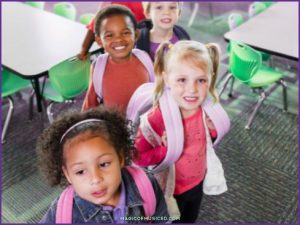
On the first day of kindergarten music, I find it’s best to assume almost nothing. Maybe you’ll get a group of strong singers, but you might also get a group that’s never used their singing voices before. They might be able to pick their own seats, or they might choose to sit next to that distracting friend that the kindergarten teacher banned them from sitting next to in homeroom.
Things you might have to demonstrate:
- How to walk in the music room
- How to sit on the carpet
- How to make a circle
- How to use a healthy singing voice
- How to behave during movement activities
In my experience, the sooner you have an established and practiced routine, the easier your kindergarten music classes go. Here’s an example of my general routine with kindergarten music class structure:
- Enter class
- Sit in assigned seat
- Welcome song
- Attendance
- Introduction into main lesson (often tied with welcome song)
- Movement activity
- Singing activity
- Musical instruments
- Active listening
- Wrap-Up
- Goodbye Song
- Line Up
This is the general formula I follow, although sometimes I’ll change the order or combine certain steps to strengthen the lesson or improve the pacing for certain groups of students. I also try to tie as many activities into the main learning topic as possible, including my choices of welcome and goodbye songs! I usually strive for a multi-modal learning approach where students can experience music through singing, movement, playing instruments, and more.
2. Engagement = Learning

Remember that detail I shared about kindergarten attention spans? I hate to say it, but if your activities and kindergarten music lessons are long and drawn out, your students likely aren’t retaining anything you’re teaching them. Kindergarteners NEED to be engaged to learn music effectively.
Here are some signs of disengagement to watch out for in kindergarten music class:
- Looking around the room during the lesson
- Asking “when is music over?”
- Becoming visibly more restless (squirming is a sign they need to move)
There are other signs to look out for too. Generally, if you notice behavior starting to shift in a negative direction or you notice students more and more distracted, it’s a sign you need to pivot and switch it up. It’s okay to do this! You can always come back to an activity later, but it can be harder to re-engage a class of kindergarteners once they’ve fully checked out of a lesson.
3. They Need To Move Often.
Say it with me – they need to move. Probably more often than you’re doing now. Kindergarteners have so much pent-up energy that you’ll probably be able to see them getting antsy. Once they’re antsy, you’ve lost them. So let them move. It’s okay, you can come back to what you’re teaching. Or better yet, build structured movement into every lesson so the students are never sitting too long. As long as the lesson has momentum, you’ll be golden.
Here are some of my favorite resources for movement in kindergarten music class!
Sources I Use for Kindergarten Movement Activities
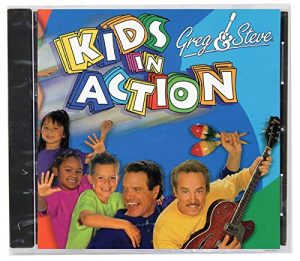
- Greg & Steve – This is an oldie but a classic that gets students moving and responding to music! I have almost every CD in my iTunes at this point! Their movement activities are perfect for pre-K through 1st grade! 🙂
- The Singing Classroom – This website has a really well-organized search tool that will let you find activities by grade level and teaching topic, making it really easy to tie their activities into a music lesson. The video demonstrations of the movement activities are also helpful for visualizing how the activity will run in your classroom.
- MusicPlayOnline – Yup. I use Music Play too! They have some great movement activities, with ideas from one of my favorite music educators, John Jacobson! The monthly subscription cost is also really reasonable if you’re on a budget!
- My Imagination (FREE!) – Confession time. When I can’t find what I’m looking for, I make it up or have the students create their own movement ideas. Sometimes those wind up being their favorite activities, and it’s always great when it works out that way!
Props I Use During Movement Activities

Want to know a secret? Kindergarteners love using props during movement activities! It’s like the magical secret to instant student engagement. Here are some of my favorite props to pull out with kindergarten.
4. Start with Opposites, Then Expand.
Are you having trouble with lesson planning for kindergarten music class? My advice is to start by teaching students differentiation through opposites. For example:
- Beat or rhythm?
- Fast or slow?
- Loud or soft?
- High or low?
- Long or short?
- Singing or speaking?
Once my kindergarteners have mastered basics like these, I’ll start revisiting and expanding on some of these concepts more. If one of my classes can successfully differentiate between singing and speaking voice, the next step might be learning how to use a healthy singing voice (with access to their head voice). If my students have mastered high and low, I might continue with solfege, introducing sol and mi first, and la later. And when my kindergarten students can differentiate between beat and rhythm, I’ll start introducing note values and basic ta and ti-ti rhythms next!
My thought process is that kindergarteners should be learning music vocabulary before anything else, understanding what a steady beat is and how that’s different from a rhythm or a melody. Once kindergarten students understand those fundamentals, it’s much easier to expand into other musical concepts.
5. Avoid Down Time!
Have you ever seen the movie Kindergarten Cop with Arnold Schwarzenegger? If you’re reading this post because you struggle with teaching kindergarten, I highly recommend watching this movie. It’ll give you a much-needed laugh.
If you haven’t seen the movie, I won’t spoil it, but I will quote one line from the character Joyce that reverberates in my head whenever I have to pause for ANYTHING in kindergarten. Here it is:
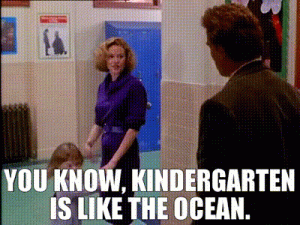
It could not be more true! This is why teaching a kindergarten music class can feel like leading a three-ring circus.
When I’m teaching kindergarten music class, I try to avoid downtime like it’s the plague. If I need to pause or slow down the lesson for any reason, I will immediately notice my kindergarten students disengaging almost like clockwork. Remember the attention span thing I mentioned? Yeah, it definitely comes into play here. When you let too much downtime happen, you’ll have a harder time re-engaging students. You also might see more negative student behavior, which is mainly due to boredom or impatience.
But what if I really need to stop the lesson?
Then you stop. I get it. Sometimes it’s unavoidable. If you do need to stop or pause a lesson, I recommend distracting your kindergarteners with some kind of task or job, even if it’s ridiculous.
- “While I’m tying Jimmy’s shoelace, everyone is going to do 10 jumping jacks, ready, set, go!”
- “While I’m getting a band-aid for Sofia, David and Claire will help pass out rhythm sticks.”
- “Can I hear you sing ____________ while I ____________?”
Even if you need to make something up, it’s better to do that than have them sit idly waiting for you to continue the lesson. Older grades might be able to handle this, but kindergarten will start to act up fast if you don’t have something for them to do in the meantime.
6. Discipline in Kindergarten Music Class
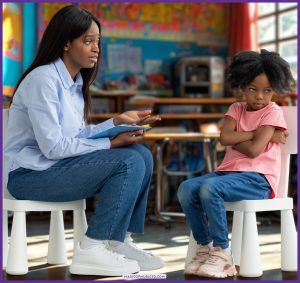
Sometimes you do need to discipline students in kindergarten music class. It can be hard to discipline a kindergartener! Some students can handle it okay but others might scream or throw a temper tantrum. Emotions can get really big in kindergarten.
When you’re delivering a consequence in kindergarten, I find the best approach is to be firm but kind. I also try to avoid surprises or traps when it comes to consequences. Instead, I usually opt to have conversations when I see behavior taking a turn.
“Theo, I saw you push Anna during our movement activity. That’s not a good choice because it could mean Anna gets hurt. Can you say sorry to Anna and remember to make good choices in our classroom? If you can’t do that, we may have to chat with mom about what’s expected in kindergarten music.”
I try to bring every discipline conversation back to classroom expectations and procedures. This helps during the discipline process, especially if I’ve already warned or spoken to the child about the inappropriate nature of their actions.
Most consequences you deliver will be small. It might mean sitting out of a movement activity or losing instrument privileges during an activity. If it’s more serious or ongoing, it might mean an email home or a visit to the principal’s office. As the teachers, it’s our job to deliver consequences when needed and ensure that the chosen consequence is appropriate for the actions of the student.
“Theo, it’s important that everyone feels safe in our classroom. Since you’re struggling to make good choices, you’ll need to stand next to me during our movement activities until you show me you can keep your hands to yourself around others.”
Don’t be afraid to use consequences to teach them what you expect. If it’s a fair consequence, it’s best to hold it firm (yes, even through crying and possible tantrums).
7. Don’t Be Afraid to Address the Crying Child.
Did I just get done telling you that it’s okay to give consequences to kids even when they throw tantrums? I sure did. Am I about to contradict myself by telling you to confront crying children? Possibly.
Here’s the thing. Emotions are a BIG thing in kindergarten. Dropping a few crackers on the floor during snack time might feel like no big deal to you and me, but it can feel like the end of the world for a kindergartener learning to regulate their emotions.
In other words, things that seem insignificant to us are sometimes very significant to them. I understand that kindergarteners cry a lot. Some kids might seem like they cry constantly. The truth is, it can be more harmful to ignore these emotional outbursts than it is to pause the lesson and talk to the child.
When you ignore a crying child, you’re reinforcing the fact to that child (and others) that they can’t depend on you during that time of need. It sends the message that you’re willing to prioritize teaching over their emotional well-being. Dismissing a child’s emotions doesn’t send a good message to any of the students and won’t help you build any lasting bonds with anyone.
So instead, if a child is crying, breathe and then ask them, “What’s wrong?”
Yes, even if it’s their third time crying this morning.
Wrapping It All Up!
Kindergarten music class is a crazy place, but it’s also a magical one. Remember, these children are going to experience many firsts with you:
✅ First music teacher
✅ First time playing an instrument
✅ First time singing for an audience
Long after kindergarten music ends, your students will look back on these moments and remember you. There’s a saying in education, “Students may not remember what you teach them, but they will always remember how you make them feel.” I feel like that’s especially true for kindergarten. Years from now, they’re not going to remember that lesson about quarter notes, but they’ll absolutely remember how they felt learning in your classroom. Kindergarten is a short snapshot in your student’s academic journey, so make it unforgettable! You’re setting the stage for a lifetime love or hatred of music. Let it be love.
Looking for More?
If you’re a new music teacher just starting, check out my posts My Advice for New Music Teachers and 5 Tips for First-Year Music Teachers for more helpful teaching tips!
Returning music teacher? Try The Power of Positive Feedback in Music Class next 😉
Want to join my free teaching resource library? Sign up for the Chamber of Freebies and access 20+ free music teaching resources now!

*This post contains affiliate links, which helps me earn a small commission at no additional cost to you if you decide to make a purchase. For more information on my use of affiliate links, please see my full disclosure statement.