Skip to content
site-logo

Magic of Music Ed

Making Music A Bit More Magical!

  • Blog
  • Shop
  • Chamber of Freebies
  • About Me
  • Contact
  • Blog
  • Shop
  • Chamber of Freebies
  • About Me
  • Contact
Chorus

Teaching Students to Sing on Pitch

Teaching Students to Sing on Pitch

Almost every music teacher has heard it: “I can’t do it! I’m tone-deaf!” As music educators, we understand the frustration of teaching students who believe they simply cannot match pitch. Many students arrive in our classrooms convinced they are “tone deaf” or “not musical,” and parents often reinforce these beliefs. However, true tone deafness (amusia) only affects about 1.5% of people. This means nearly all of your students can learn to sing on pitch with proper instruction and practice.

Teaching Students to Understand Pitch

Initially, students develop pitch recognition similarly to language acquisition—a learned skill that grows through practice and exposure. In fact, most kindergarteners should be able to recognize basic pitch patterns. Start by teaching your youngest students to sing on pitch with these fundamental concepts:

  • Same or different sounds
  • High versus low pitches
  • Melodic direction (up/down)
  • Volume versus pitch (many young students confuse loud/soft with high/low)

Help Every Student Learn to Sing on Pitch

Make pitch matching part of your daily routine through a simple attendance song. For example, here’s how I use this song to take attendance.

 You’ll find that his simple echo song allows you to:

  • Provide quick, supportive feedback
  • Guide students with questions like “Are you matching what you hear?”
  • Create a low-pressure environment for practice
  • Quickly document individual student progress

Next, as students develop awareness, you can include more specific feedback such as “Do you think your pitch needs to go higher or lower?” This will help your students think about pitch on a deeper level.

Teaching Students Through Songs and Games

Start with these call-and-response songs and singing games that naturally develop pitch matching:

  • Charlie Over the Ocean
  • Kye Kye Kule
  • Down By The Bay

Above all, guide your students to find their “nice light singing voice” rather than using a playground or shouting voice. Help them understand the difference between speaking, shouting, and singing voices.

Helping Students Progress in Pitch Matching

Always start with larger intervals like Sol-Mi for K-1 students. Most second graders can graduate to smaller intervals over time. In general, most students find initial success with:

  • Descending intervals before ascending ones
  • Matching pitch with a human voice before instrumental sounds like piano
  • Using gestures like Curwen hand signs
  • Singing within their natural speaking range

Supporting Student Success with Interactive Resources

https://magicofmusiced.com/wp-content/uploads/2024/12/Boom-Cards-Preview-Template-1-1.mp4


Many students learn better through games and interactive activities. One engaging option for teaching high and low pitch recognition is my Boom Cards for High and Low Sounds. Students love learning through these digital task cards because it makes them feel like they’re playing games while learning musical concepts. This deck of Boom cards uses a variety of sounds—from animals to instruments to nature recordings—making higha and low sounds fun and relatable for young learners. Click here to purchase the resource!

If you’re new to using Boom Learning and want to know how to get started check out my blog post “Boom Cards for Music Class” for a complete guide to implementing these digital task cards into your music class.

Teaching Students Based on Individual Needs
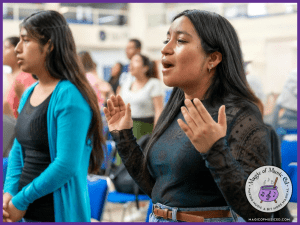
Image showing upper elementary music students singing passionately in music class.

Always observe which approaches work best for each student. Some may:

  • Match your singing voice better than the piano
  • Succeed by incorporating Curwen hand signs
  • Perform with more accuracy within their natural speaking range
  • Benefit from visual pitch representations

Working with Parents and Administrators

Parents and administrators usually don’t realize that singing on pitch is a teachable skill. Therefore, it’s important to take the time to explain your teaching process! Share stories of student successes and describe how specific teaching strategies can help students improve their musical abilities. Ultimately, when administrators see the systematic way you develop musical skills, they can better understand and support your program.

For parents who believe their child “can’t sing,” provide concrete examples of how pitch-matching develops through consistent practice and instruction. This kind of collaboration helps build trust in your teaching process and encourages practice at home.

If students continue to struggle after trying multiple teaching approaches, consider consulting with your special education team or referring a student to an audiologist for additional support. Ultimately, building the understanding and support of your administration makes accessing these support services easier if warranted.

Teaching students to sing on pitch requires patience and multiple approaches. The good news is, nearly every child can sing on pitch. Start with basic pitch recognition, use engaging songs and activities, and celebrate every small victory. Your students will develop confidence along with their musical abilities. Remember, a structured, supportive approach helps turn “I can’t” into “I can!”

SHARE THIS
Beginning Music TeacherChorusEar TrainingEarly Elementary Musicelementary musicFirst-Year Music TeachersKindergarten MusicMatch PitchMusic TeacherMusic TeachersMusical SkillsSing on PitchSingingTeaching Students to SingTips for New Music Teachers
About Suzanne

About Suzanne

My name is Suzanne. I am a music teacher from the state of NJ who is passionate about sharing creative ideas for the music classroom!

Related Posts

Teaching Music to Students with Hyperacusis
Is Music Class a Waste of Time?
Music Performance Assessment in the Classroom
An Easy Thanksgiving Music Activity for K-1

Leave a Reply Cancel reply

Your email address will not be published. Required fields are marked *

Recent Posts

  • Teaching Music to Students with Hyperacusis
  • Is Music Class a Waste of Time?
  • Music Performance Assessment in the Classroom
  • An Easy Thanksgiving Music Activity for K-1
  • Strategies for Teaching Note Values to Kids

Recent Comments

  1. SDelonas on How Music Education Benefits Students
  2. Monish Mehta on How Music Education Benefits Students
  3. SDelonas on How Music Education Benefits Students
  4. Binay Kumar Sarker on How Music Education Benefits Students
  5. Classroom Transitions in Elementary Music - Magic of Music Ed on 10 Tips for Teaching Music Effectively

Archives

  • November 2025
  • October 2025
  • September 2025
  • August 2025
  • July 2025
  • June 2025
  • May 2025
  • April 2025
  • March 2025
  • February 2025
  • January 2025
  • December 2024
  • November 2024
  • October 2024
  • September 2024
  • August 2024
  • December 2022
  • April 2022
  • February 2022
  • January 2022
  • December 2021

Categories

  • Advocacy
  • Assessment & Testing
  • Assessment & Testing
  • Back to School
  • Band
  • Blog
  • Boom Learning
  • Chorus
  • Classroom Management
  • Composers
  • Concerts
  • Cross-Curricular
  • December
  • Dynamics
  • Earth Day
  • Fall
  • Freebies
  • Games for Music Class
  • Genres
  • Holidays
  • Instrumental Music Teachers
  • Instruments of the Orchestra
  • Ledger Lines
  • Lesson Ideas
  • Listening Lessons
  • Lunar New Year
  • Music Activities
  • Music Community
  • Music Form & Analysis
  • Music Games
  • Music Genres
  • Music History
  • Music Teacher Tech Help
  • Music Theory
  • New Music Teachers
  • Note Reading
  • Note Values & Duration
  • Orchestra
  • Parents
  • Pitch
  • Quiet Music Lessons
  • Reading Music
  • Recorder
  • Rhythm
  • Seasonal
  • Social-Emotional Learning (SEL)
  • Solfege
  • Songs
  • Special Education
  • Spring
  • Students
  • Sub Plans
  • Summer
  • Surviving Until Break
  • Teaching Ideas
  • Teaching Orchestra Seating
  • Teaching Tips
  • Tempo
  • Testing Week
  • Time Signatures
  • Uncategorized
  • Virtual Field Trips
  • Winter
  • World Culture
About Me

About Me

Suzanne, Music Teacher
Hi, I’m Suzanne! I am a singer, flutist and most importantly a passionate music educator. I love putting creativity and imagination into my teaching and I can't wait to share my ideas with music teachers like you!

Popular Posts

10 Unique Themes For School Concerts
Chorus ➤ December 29, 2021

10 Unique Themes For School Concerts

Am I the only music teacher who thinks about themes for the next school concert when the first one finishes? If you read my blog post about concert planning, you’ll know I typically like to...

Read More
Teaching Music Genres in Music Class
Genres ➤ February 6, 2022

Teaching Music Genres in Music Class

Are you teaching music genres in your elementary music class? Including a variety of music genres in your teaching is essential to ensuring a rounded music curriculum. It also plays a role in your students...

Read More
10 Tips for Teaching Music Effectively
Back to School ➤ December 1, 2022

10 Tips for Teaching Music Effectively

Nine years. Sometimes I can’t believe I’ve been teaching elementary music this long. It’s been a crazy journey and there’s never a dull moment. There have been humps, bumps, and potholes but there have also...

Read More
Concert Planning for Music Teachers
Chorus ➤ December 1, 2021

Concert Planning for Music Teachers

It’s December 1st – you know what that means. For most music teachers, December marks the beginning of crazy season. The time of year where we feel anxious and stressed beyond belief. I know it’s concert season because I start to leave my belongings in other classrooms when I travel teach – oops! In any case, this year marks my tenth winter concert and I’ve learned a few strategies along the way. This blog post features 24 of my best concert planning tips!

Read More

Categories

  • Advocacy
  • Assessment & Testing
  • Assessment & Testing
  • Back to School
  • Band
  • Blog
  • Boom Learning
  • Chorus
  • Classroom Management
  • Composers
  • Concerts
  • Cross-Curricular
  • December
  • Dynamics
  • Earth Day
  • Fall
  • Freebies
  • Games for Music Class
  • Genres
  • Holidays
  • Instrumental Music Teachers
  • Instruments of the Orchestra
  • Ledger Lines
  • Lesson Ideas
  • Listening Lessons
  • Lunar New Year
  • Music Activities
  • Music Community
  • Music Form & Analysis
  • Music Games
  • Music Genres
  • Music History
  • Music Teacher Tech Help
  • Music Theory
  • New Music Teachers
  • Note Reading
  • Note Values & Duration
  • Orchestra
  • Parents
  • Pitch
  • Quiet Music Lessons
  • Reading Music
  • Recorder
  • Rhythm
  • Seasonal
  • Social-Emotional Learning (SEL)
  • Solfege
  • Songs
  • Special Education
  • Spring
  • Students
  • Sub Plans
  • Summer
  • Surviving Until Break
  • Teaching Ideas
  • Teaching Orchestra Seating
  • Teaching Tips
  • Tempo
  • Testing Week
  • Time Signatures
  • Uncategorized
  • Virtual Field Trips
  • Winter
  • World Culture

Shop

Chamber of Freebies!

Not a member?

Join now for more helpful blog posts, music ed resources and (best of all) access to the growing library of free resources for elementary music teachers 🙂

Sign me up!

  • Blog
  • Shop
  • Chamber of Freebies
  • Disclosures & Disclaimers
  • Privacy Policy
  • Contact Me
Copyright © 2026 | All Rights Reserved |